SOPHIE DRIES
The Wonder of Natural Materials
Some people arrive at design by a straight path. Sophie Dries did not. Obsessed by chemistry and Ancient Egypt as a child, she once thought medical school might be the right path to fulfil her interests. It wasn’t. And along the way, she realized architecture was the one discipline broad enough to hold it all: geometry, materials, transformation.
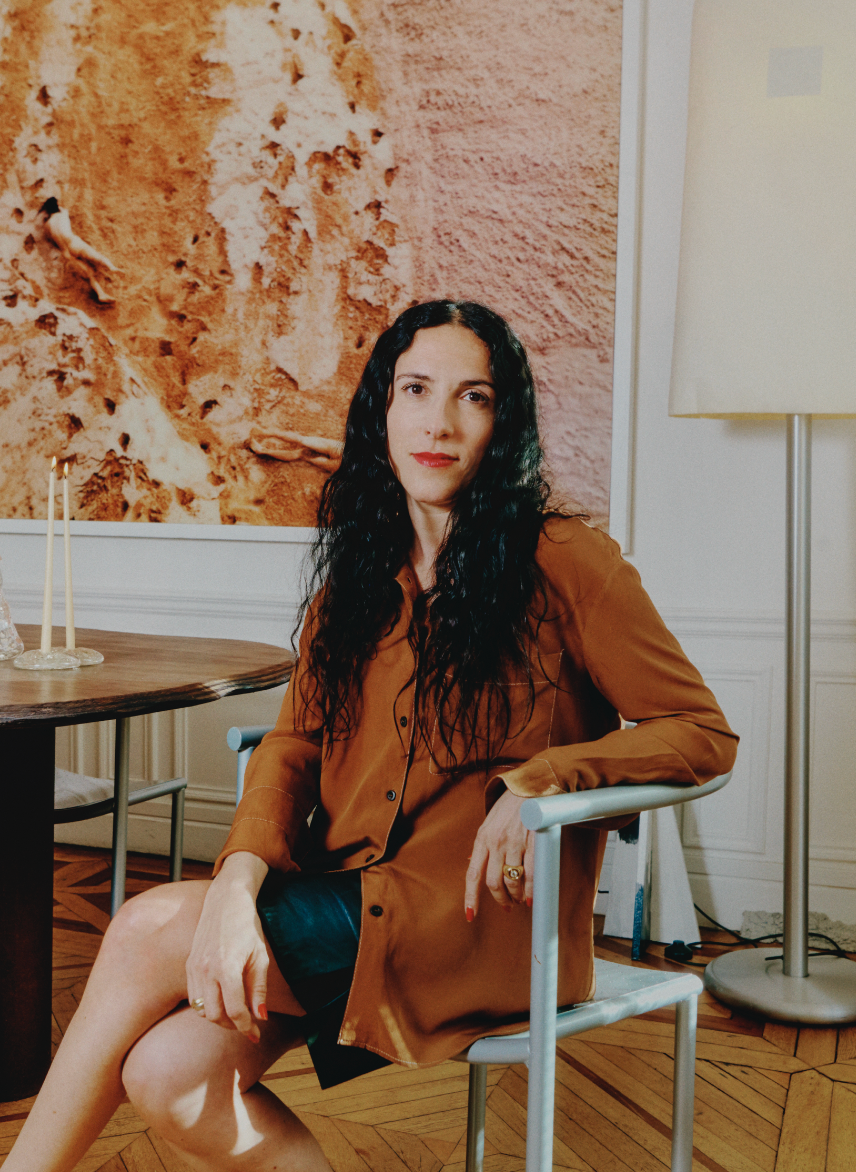
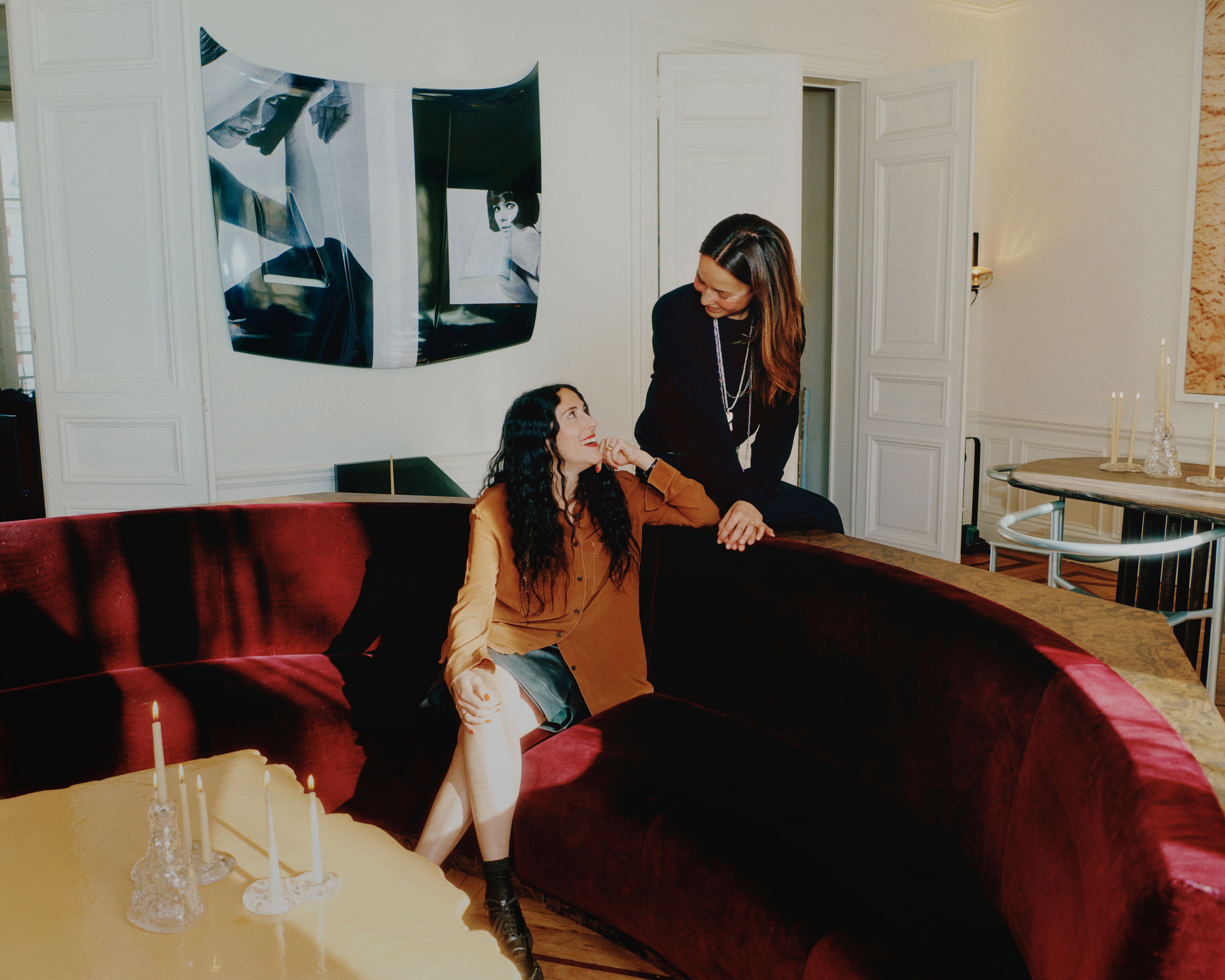
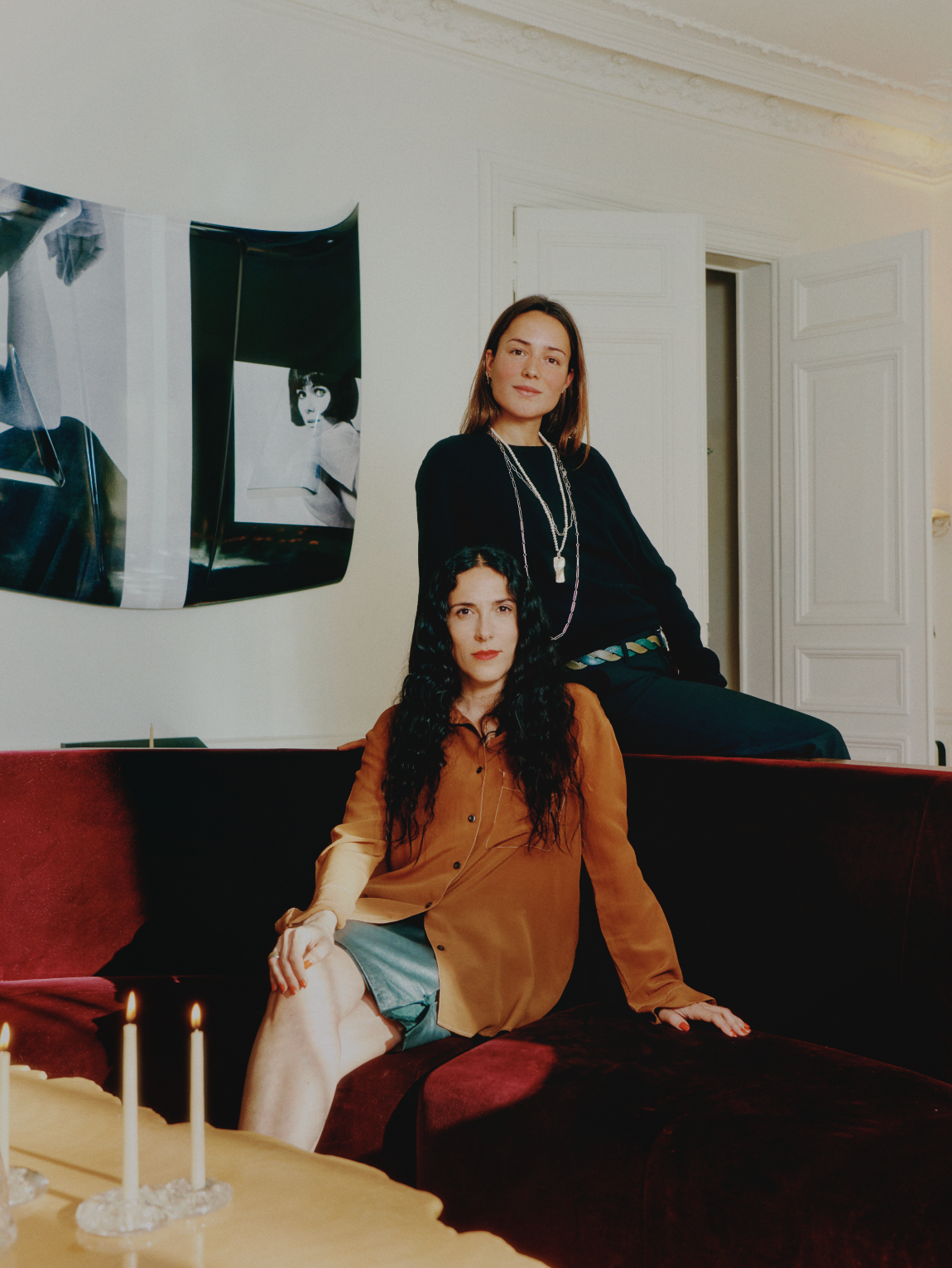
I met Sophie a few months ago in her Parisian home, surrounded by the objects and textures she has spent a career collecting and creating. She showed me her projects, and very soon we started ours.
I met Sophie a few months ago in her Parisian home, surrounded by the objects and textures she has spent a career collecting and creating. She showed me her projects, and very soon we started ours.
Sophie's work spans private residences, luxury boutiques, art galleries and collectible objects, from Paris to Milan, Tokyo and New York. She has received wide recognition, having been listed on the AD100 for several years and named among Phaidon's world's best interior designers. Yet she remains remarkably approachable and humble, carrying a calmness and a genuine curiosity that feel almost impossible given how full her life is. As she says herself: the most important thing is to stay curious.
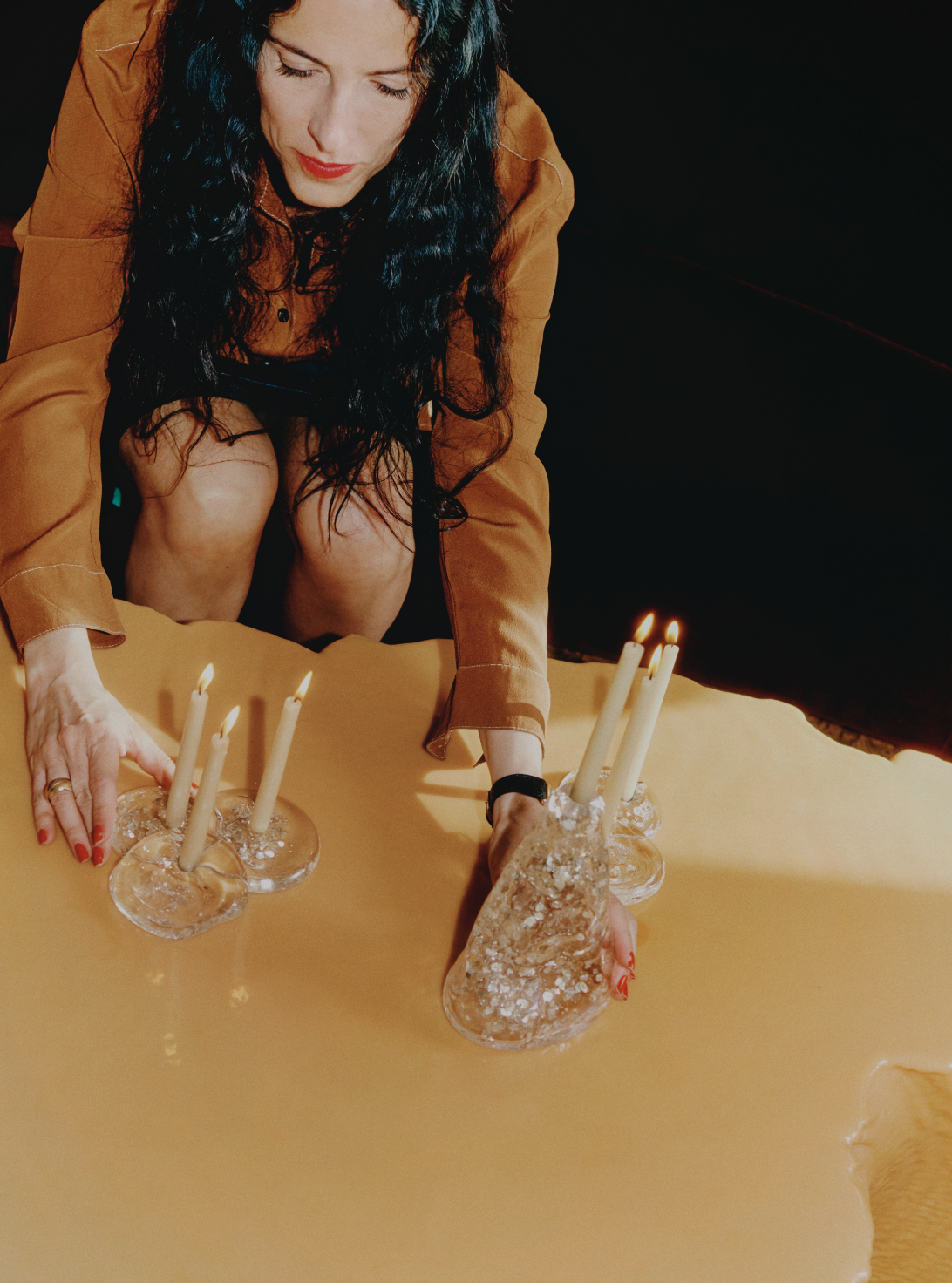
The path to design and natural materials
When Sophie found her way to architecture, she saw the possibility of working with materials in a way that felt both scientific and instinctive. A master's in furniture design at Aalto University in Helsinki deepened that foundation. Craft was not a supplement to her education; it was central to it. She worked with glass, wood, textile and ceramics. "It was really my first experience of making," she says. The influence of the great mid-century masters, Alvar Aalto, Le Corbusier, Mies van der Rohe, came alongside it, forming a design vocabulary that is rigorous and warm in equal measure. That sensitivity to natural materials has never left her.
A Sophie signature: sharp lines and strong textures
A Sophie signature: sharp lines and strong textures
Ask Sophie to describe her style and she answers without hesitation. "The lines are geometric, neat and minimal. I go really strong on textures, more than patterns." The distinction matters to her: patterns, in her work, must emerge from the material itself. They are never applied or decorative. They are what the material already is. Sophie works extensively with metal, glass and ceramics. Each project begins not with a mood board, but with an understanding of place, what she calls the genius loci, the spirit of a location. "It's completely different if you're working on a loft in a contemporary city like New York, or a building from the 18th or 19th century in Italy. You have to understand the context." And then, just as importantly, the person. "Designing someone's home is like making a portrait. It should look like them, but it's done by me."
"I'm obsessed with the transformation of materials. When materials are natural, they're alive. You can experiment with them, and over time they age like fine wine."
"I'm obsessed with the transformation of materials. When materials are natural, they're alive. You can experiment with them, and over time they age like fine wine."
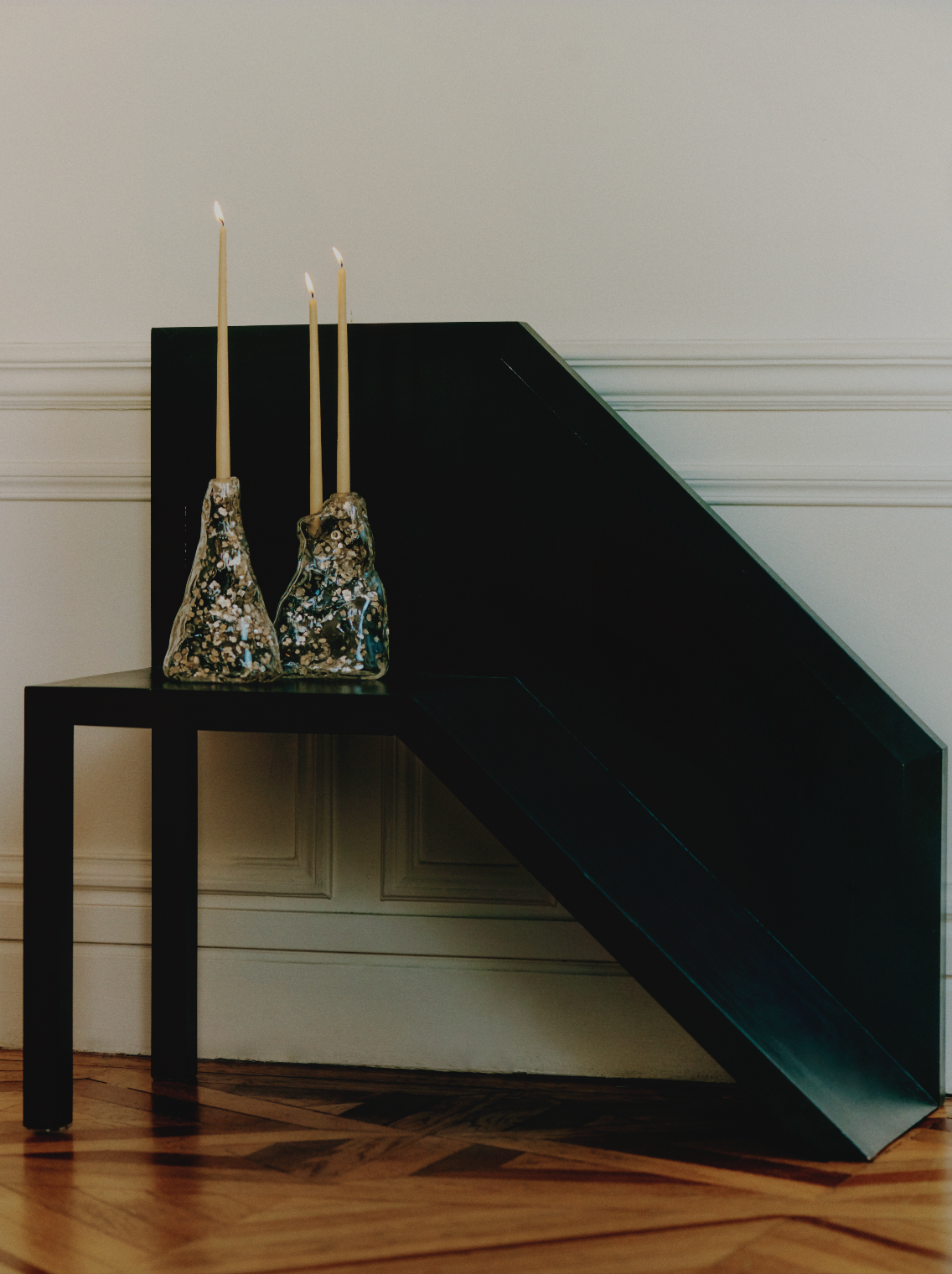
Our mica candle holders
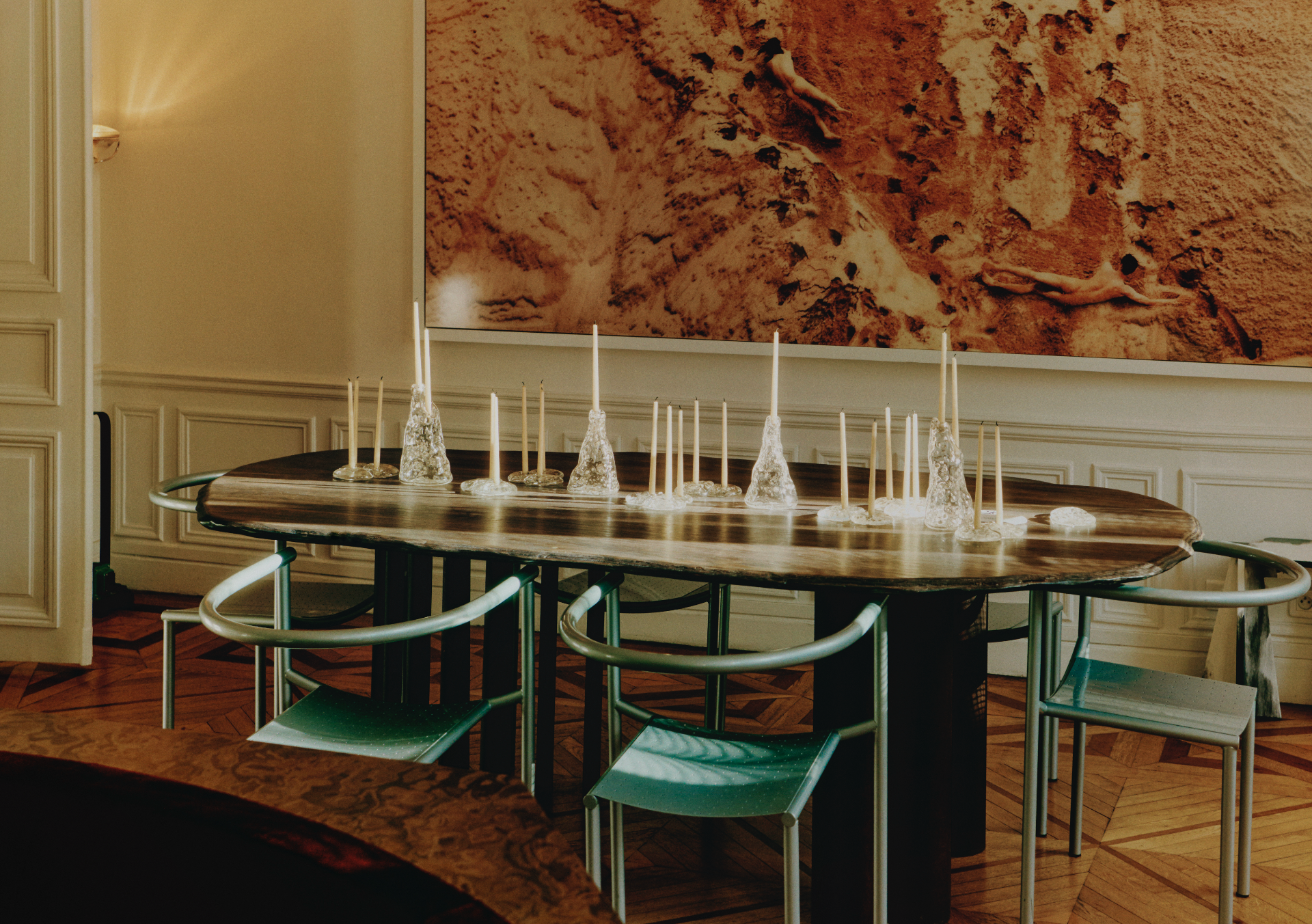
The objects we made together were born from one of Sophie's longest-standing fascinations: minerals. "I'm obsessed with them, as a child and as a grown-up. Minerals are natural wonders. They are the most beautiful decorative elements in nature, and we still can't fully explain how they form chemically. That mystery is part of what draws me."
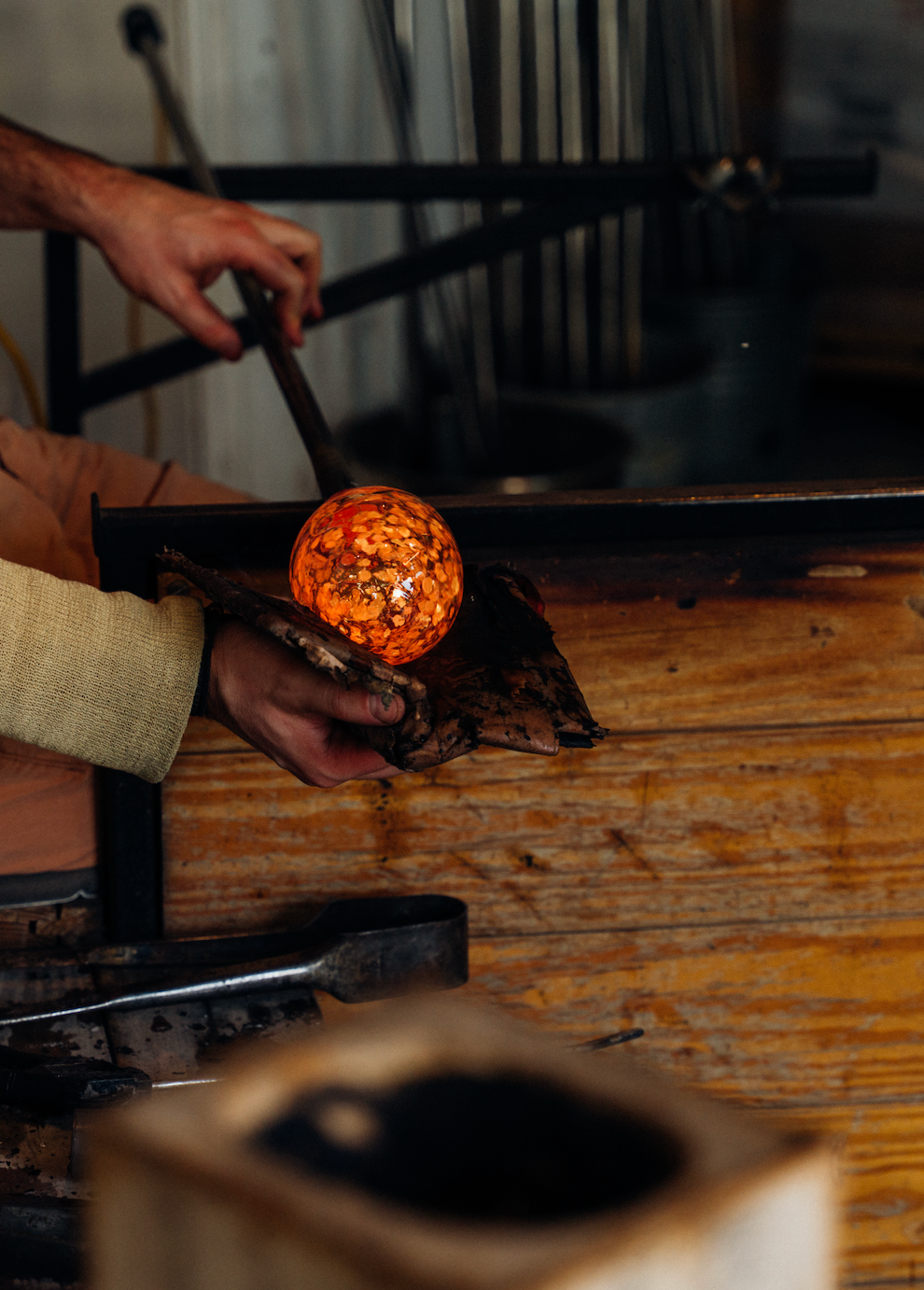
Over the years, Sophie has incorporated minerals throughout her work: pyrite in fireplace accessories, gypsum in interiors, and most recently, mica in blown glass. Mica, she explains, creates a kind of quiet magic inside the glass. "It produces this natural wonder, something that couldn't be designed, only discovered." The shapes of our candle holders follow the same logic: organic, drop-like, created by the randomness of the blowing process itself. No two are exactly alike.
For Sophie, part of what made the project meaningful was accessibility. Much of her gallery work, large glass pieces made with Murano glassblowers, exists at a scale and price point that she admits is beyond most people's reach. "Sometimes even I can't afford the pieces I make with galleries," she says with a laugh. The candle holders were a chance to make something that could genuinely live in different homes, be given as a gift, and become part of daily life.
Our Q&A with Sophie Dries
Our Q&A with Sophie Dries
Is there a piece of advice you'd give to someone starting their own studio today?
Is there a piece of advice you'd give to someone starting their own studio today?
This is advice I would give to everyone: be curious. In France we say la curiosité est un vilain défaut, curiosity is a bad habit, but I completely disagree. Being curious about everything is essential.
Who do you look to as a mentor?
Who do you look to as a mentor?
My mentors are women. Miuccia Prada has made such a strong statement in fashion, art and architecture. She once said: if nobody hates it, it's probably useless. That stayed with me. If you do something strong, it's okay to be disliked.
You and your partner Marc Lechevrier are both creative. Does your work cross over?
You and your partner Marc Lechevrier are both creative. Does your work cross over?
We get that question all the time. We have been commissioned together many times, though it has never quite come together, for reasons outside our control. We constantly talk about each other's work. He's an artist. What I do is a service, something creative, but not art. I think we both respect that distinction.
What drew you to working with The 246?
Exactly what I said about staying open-minded and curious: that is your project. You bring together very different creative people from all over the world. And I completely connect with the idea of making objects that people can live with, while telling a story.
Since we're The 246 and not The 247: what does your ideal day off look like?
Since we're The 246 and not The 247: what does your ideal day off look like?
My birthday is next week, and I'm taking a day off. We're going somewhere as a family to relax. It's a surprise. Maybe that's the perfect day off: one you didn't plan yourself.
Thank you, Sophie, for your time, your generosity, and for opening your home to us. We are so happy to show the world we made together.


