BOSCO SODI
The Beauty of Letting Go
There is something refreshing about speaking with Bosco Sodi. In a world increasingly obsessed with control, Bosco has built an entire practice around letting go.
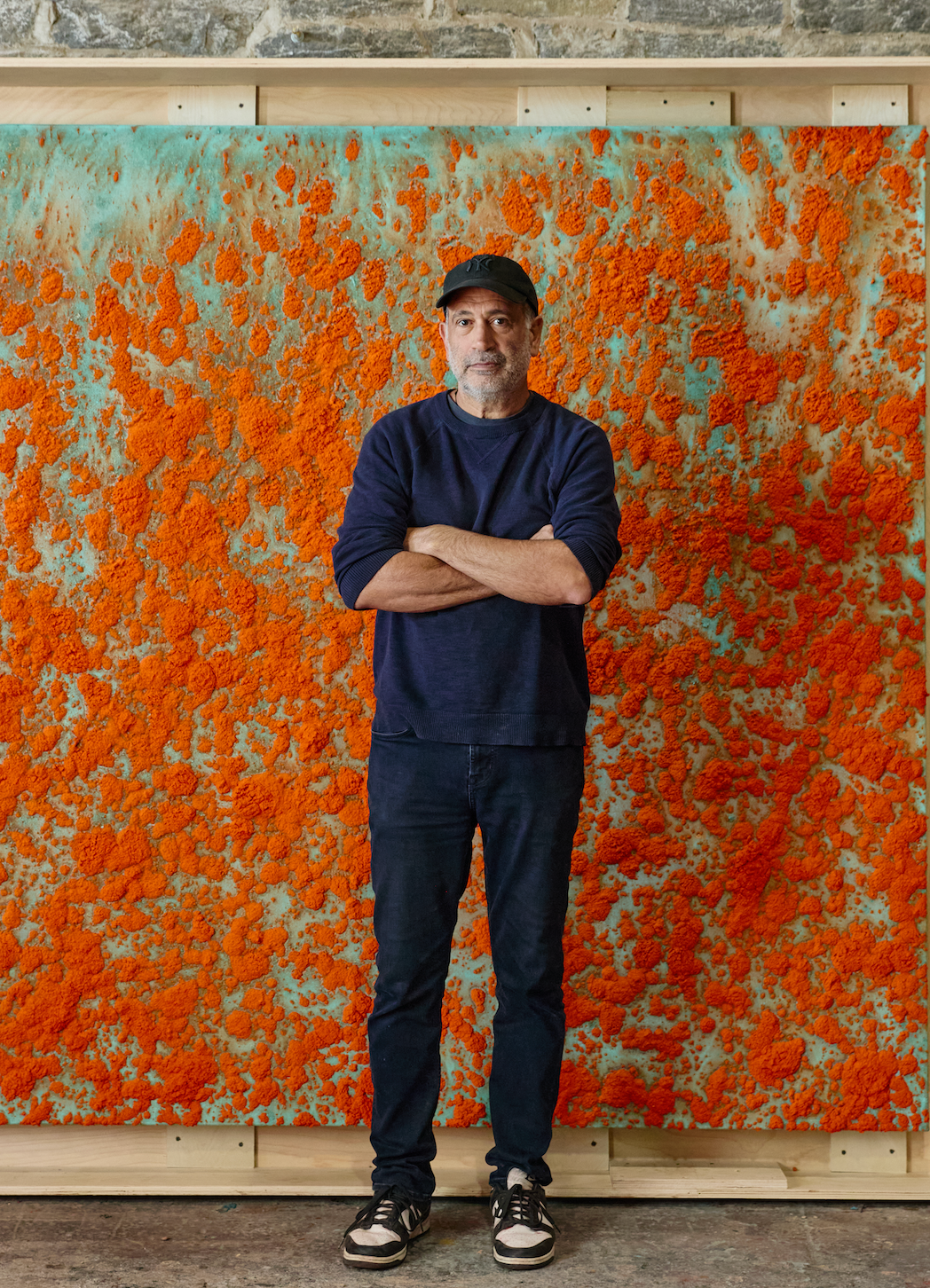
I first encountered Bosco's work as a child while visiting his exhibitions at Axel Vervoordt. I remember being immediately drawn to his work: the textures, the colours. Every piece felt raw yet perfectly complete at the same time.
I first encountered Bosco's work as a child while visiting his exhibitions at Axel Vervoordt. I remember being immediately drawn to his work: the textures, the colours. Every piece felt raw yet perfectly complete at the same time.
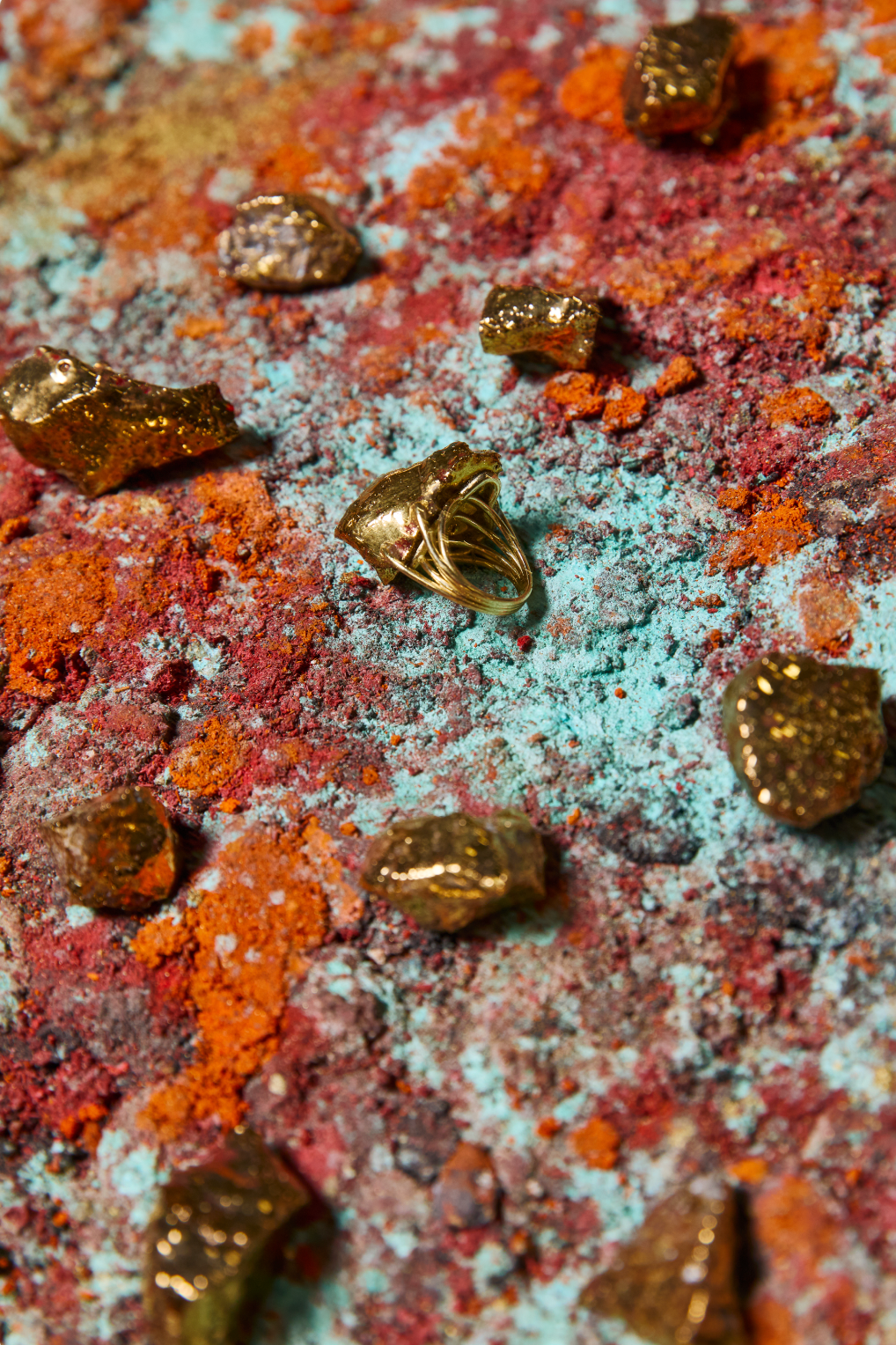
Years later, visiting Casa Wabi in Puerto Escondido only deepened that admiration. A few months ago, I was lucky enough to be introduced to Bosco himself. As we spoke about our respective worlds and what we do at The TwentyFour Six, he quickly suggested an idea. "I'll bring you small volcanic stones, glazed in 22-karat gold, and you turn them into rings." That became the foundation of our collaboration: a series of rings featuring volcanic stones, hand-selected and glazed by Bosco himself.
Art as Medicine
Born in Mexico and now dividing his time between New York, Oaxaca, Kyoto and the Greek island of Folegandros, Bosco has spent his career working with materials that refuse to behave exactly as planned. Clay cracks, pigments react, surfaces transform and accidents become part of the final work. Rather than resisting these changes, he welcomes them.
Interestingly, Bosco never formally studied art. As a child, after being diagnosed with dyslexia and attention deficit disorder, his mother enrolled him in art classes rather than choosing medication. More than thirty years later, he still describes art in exactly the same way: "It's my medicine. My therapy."
Our Q&A with Bosco
Our Q&A with Bosco
You started creating at a very young age. Looking back, were there already certain materials or colours that attracted you?
I used to work a lot with clay. Clay is very therapeutic. My mother still has some figures that I made when I was a kid. I was also painting, but always very abstract, very physical, with a lot of movement and a lot of release of energy. It's always been that way. And yes, there were always many colours. I've always loved the American Abstract Expressionists, but at the same time I was drawn to artists like Tàpies, who worked heavily with texture and material. Since the beginning, I've been searching for a way to combine colour with texture and matter.
Much of your work is guided by a philosophy that values imperfection, change and the unexpected. How did you find your voice as an artist?
Much of your work is guided by a philosophy that values imperfection, change and the unexpected. How did you find your voice as an artist?
In my case it was very organic. Since I was young, I was reading about Buddhism and later Zen philosophy. Eventually I discovered Wabi-Sabi and realised I was already living it, not only in my work but also in my life. It's about accepting accidents, accepting the passing of time and understanding that imperfection makes things unique and irrepeatable. For me, this philosophy extends far beyond the studio. It shapes the way he works, the materials he chooses and the way he moves through the world.
Are there artists that have had a big influence on your work?
Are there artists that have had a big influence on your work?
In order to become an artist, you have to know what has been done before. Otherwise, you can be doing something that has already been done, and it makes no sense. I truly believe in understanding art history, but my inspiration today comes from nature, my family and my friends.
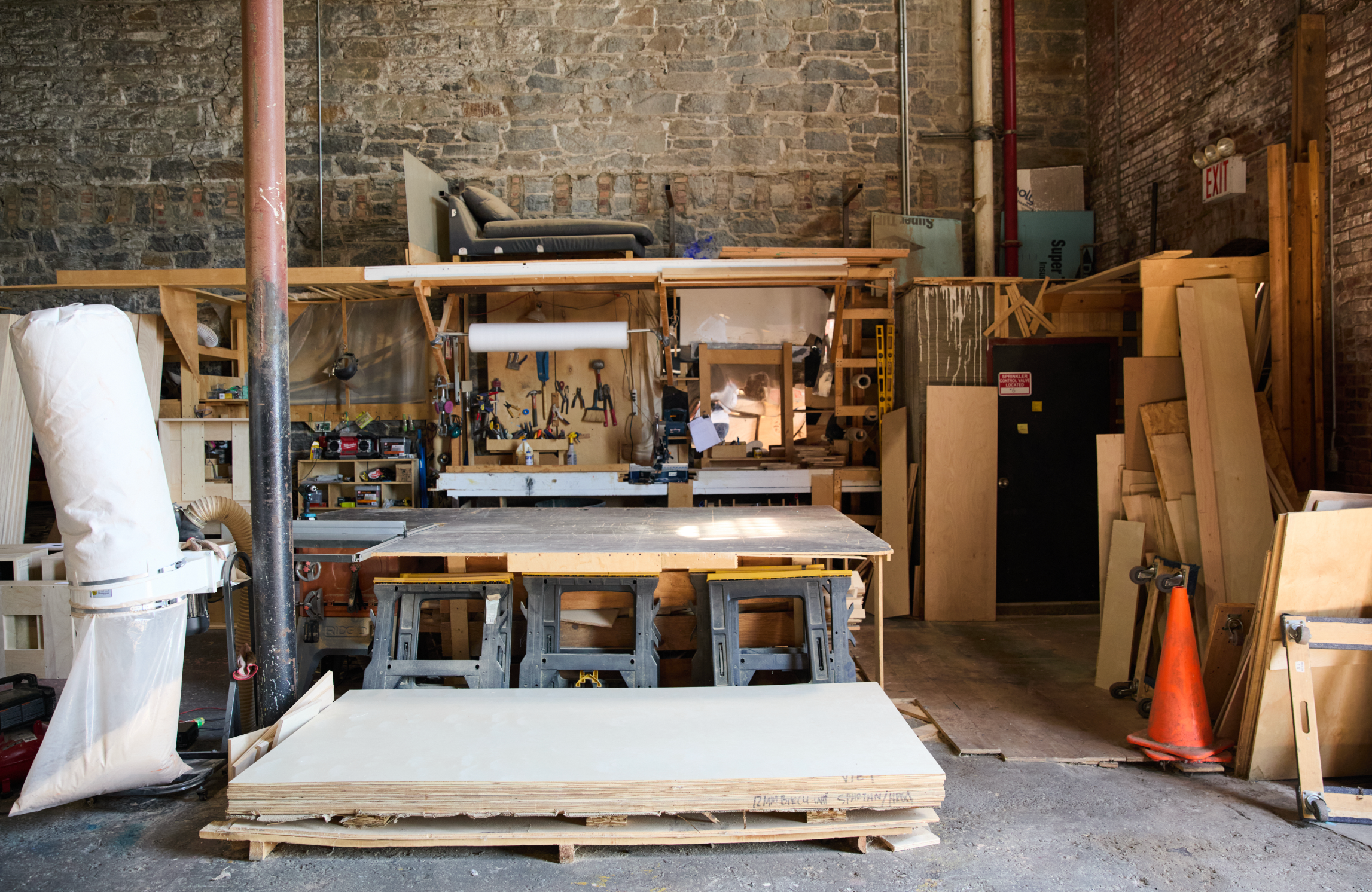
You work between New York, Mexico, Kyoto and Greece. Does your work change depending on where you are?
A lot. Not only because of the atmosphere, but because I believe in cultural cross-pollination. The aesthetics of different places influence my work, but so do the materials. The clay from Japan is different from the clay in New York. The water is different. The reactions are completely different. When I see one of my paintings, I may not remember the year it was made, but I know exactly where I made it because of the texture and the way the materials react.
This openness to materials, accidents and individuality is precisely what made our collaboration feel so natural.
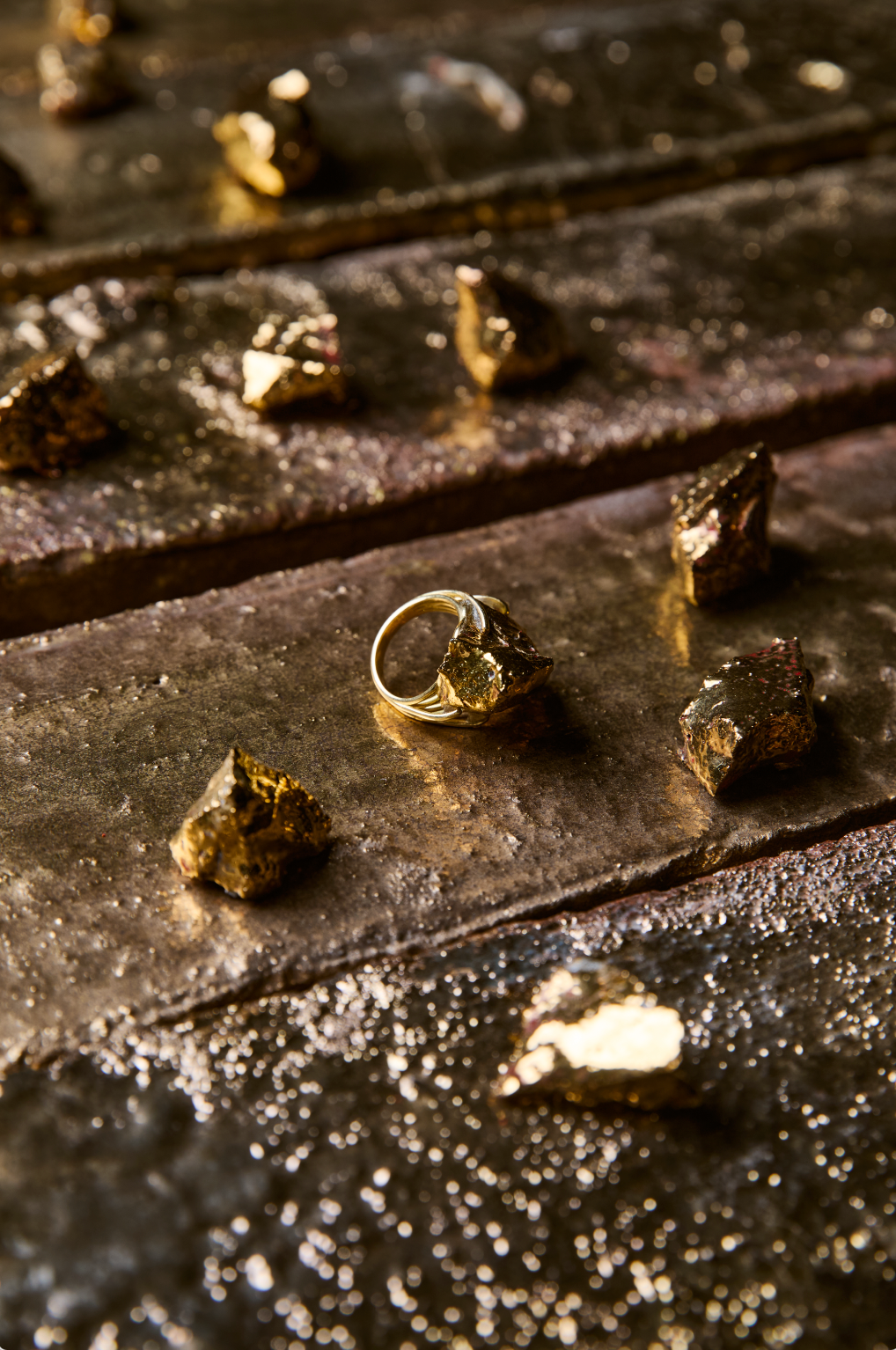
Let's talk about our collaboration.
When we first started discussing a project together, I immediately knew I didn't want to create an edition where every piece looked the same. I wanted to do something unique. With this project, I thought we could create rings using volcanic stones.
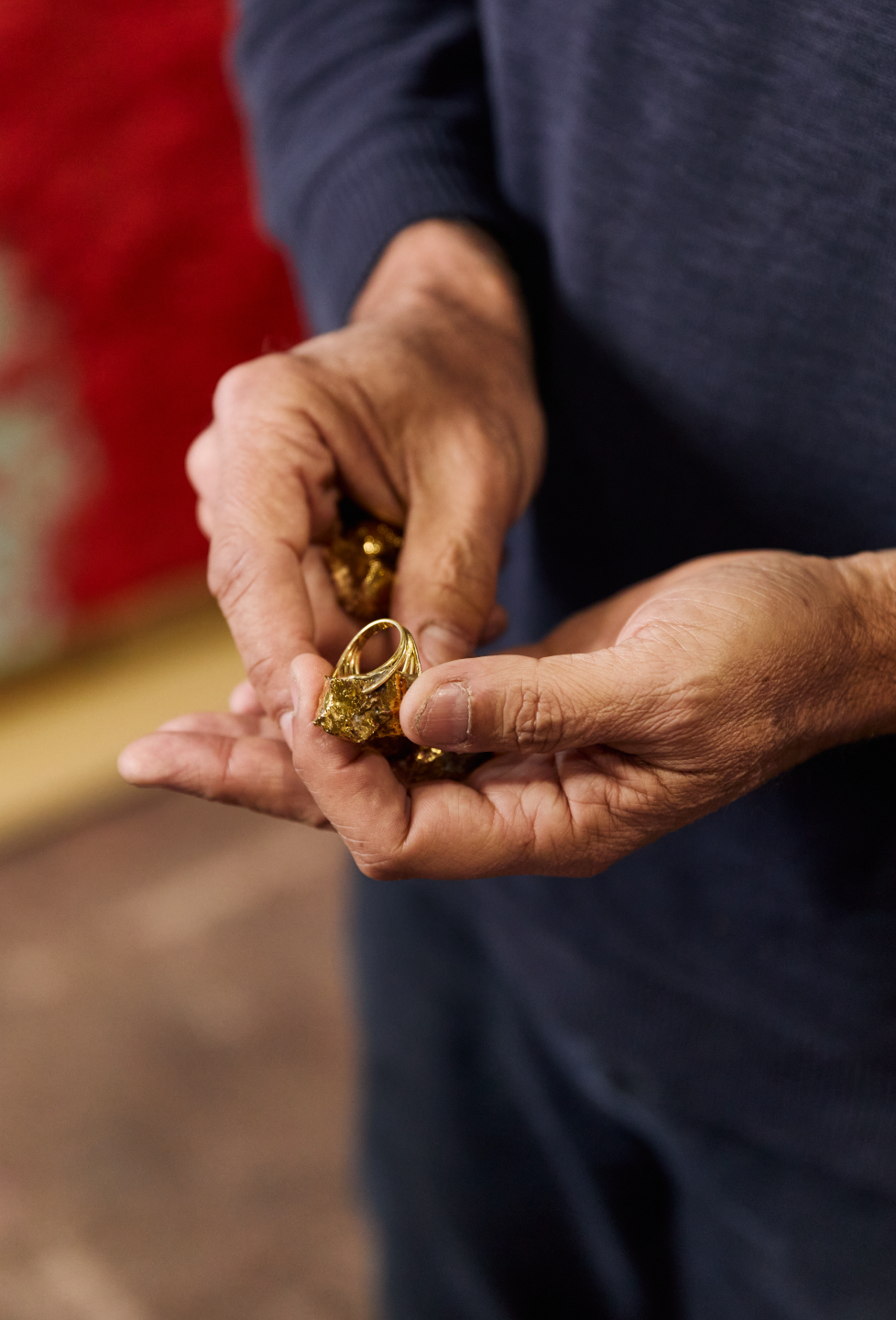
Can you guide us through the process of making each ring?
I personally go to the volcano and select rocks based on their forms. Every rock is unique and irrepeatable. We clean them and glaze them. First with a red base and finally a 22-karat gold glaze. Anyone who owns one of these rings will own a single piece, it's a piece of art.
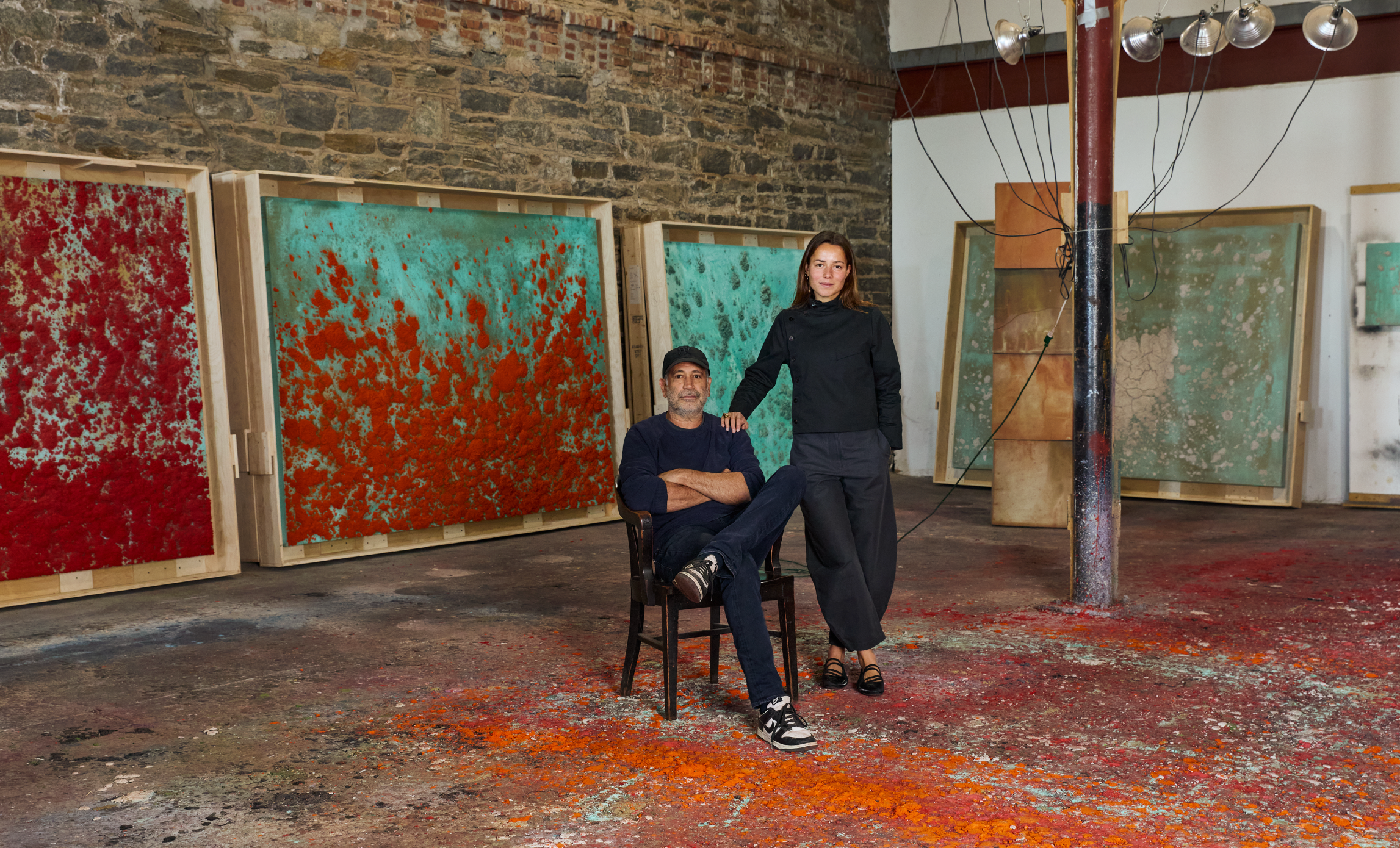
We collaborated on the actual ring design, and I think they're really beautiful. You took care of the design and making the base of the ring, I chose the shapes and glazed the stones.
Beyond your own artistic practice, your are also the founder of Casa Wabi, a non-profit foundation and residency programme on the Oaxacan coast. Why was it important for you to create Casa Wabi?
Beyond your own artistic practice, your are also the founder of Casa Wabi, a non-profit foundation and residency programme on the Oaxacan coast. Why was it important for you to create Casa Wabi?
When my career started doing commercially very well, I wanted to give something back. It didn't feel right to receive so much from something I truly love without sharing it. First with artists, then with my country, Mexico, and specifically with the Oaxacan coast, a place that means a lot to me.
It was established nearly twelve years ago, the foundation has since welcomed artists from around the world, creating a space for exchange, experimentation and connection with the surrounding landscape.
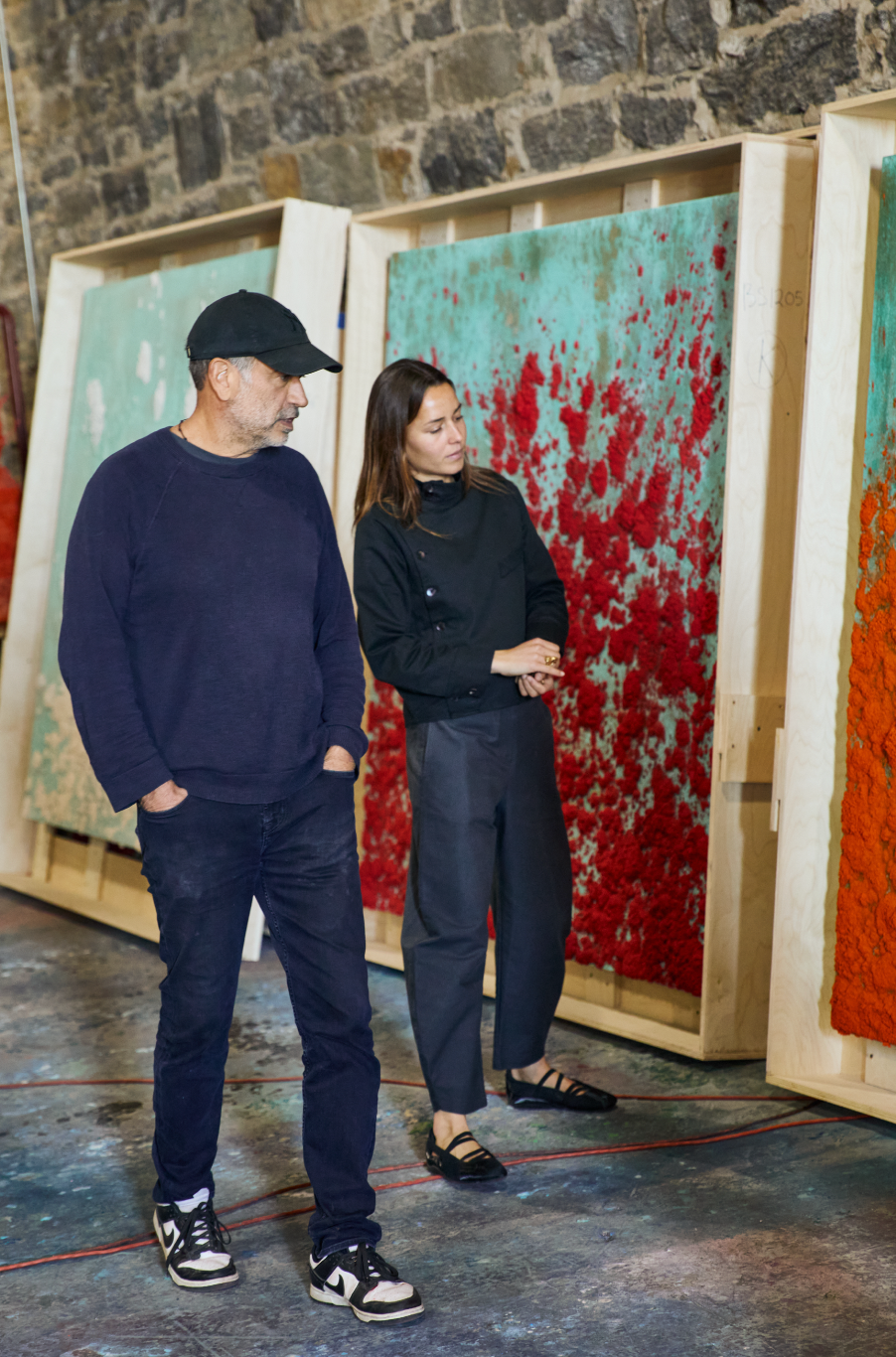
What advice would you give your younger self or your children?
As a human being, something I always tell my children is that you should leave the world better than the one you received.You have to make an impact.
It doesn't have to be a big impact. It can be small. But you should be able to say, "I did my part to make the world better." Always be respectful of nature and other human beings. Always stay positive and understand that life goes very fast. If you don't take advantage of it, it's gone. Don't focus on insignificant details.
We always finish with one last question. We're The TwentyFour Six, not TwentyFour Seven. Some people see it as ‘take one day off’. What does your perfect day look like?
We always finish with one last question. We're The TwentyFour Six, not TwentyFour Seven. Some people see it as ‘take one day off’. What does your perfect day look like?
It depends where I am. Here, I like going to our house upstate. Taking a sauna. Swimming in the lake. Playing tennis with my kids. At Casa Wabi, I love waking up very early, going to the studio, and then spending the day with friends. In Folegandros, I love long walks and then going to the studio in the afternoon. And in general, I love a long lunch with friends.
For Bosco, what matters is remaining respectful of nature, of other people and of the limited time we have.
For Bosco, what matters is remaining respectful of nature, of other people and of the limited time we have.
Perhaps that is the thread running through everything Bosco creates, from his paintings and sculptures to Casa Wabi and these rings. A belief that beauty lies not in control, but in participation. In allowing materials, time and circumstance to play their part. The most meaningful things are often those that could never be repeated.